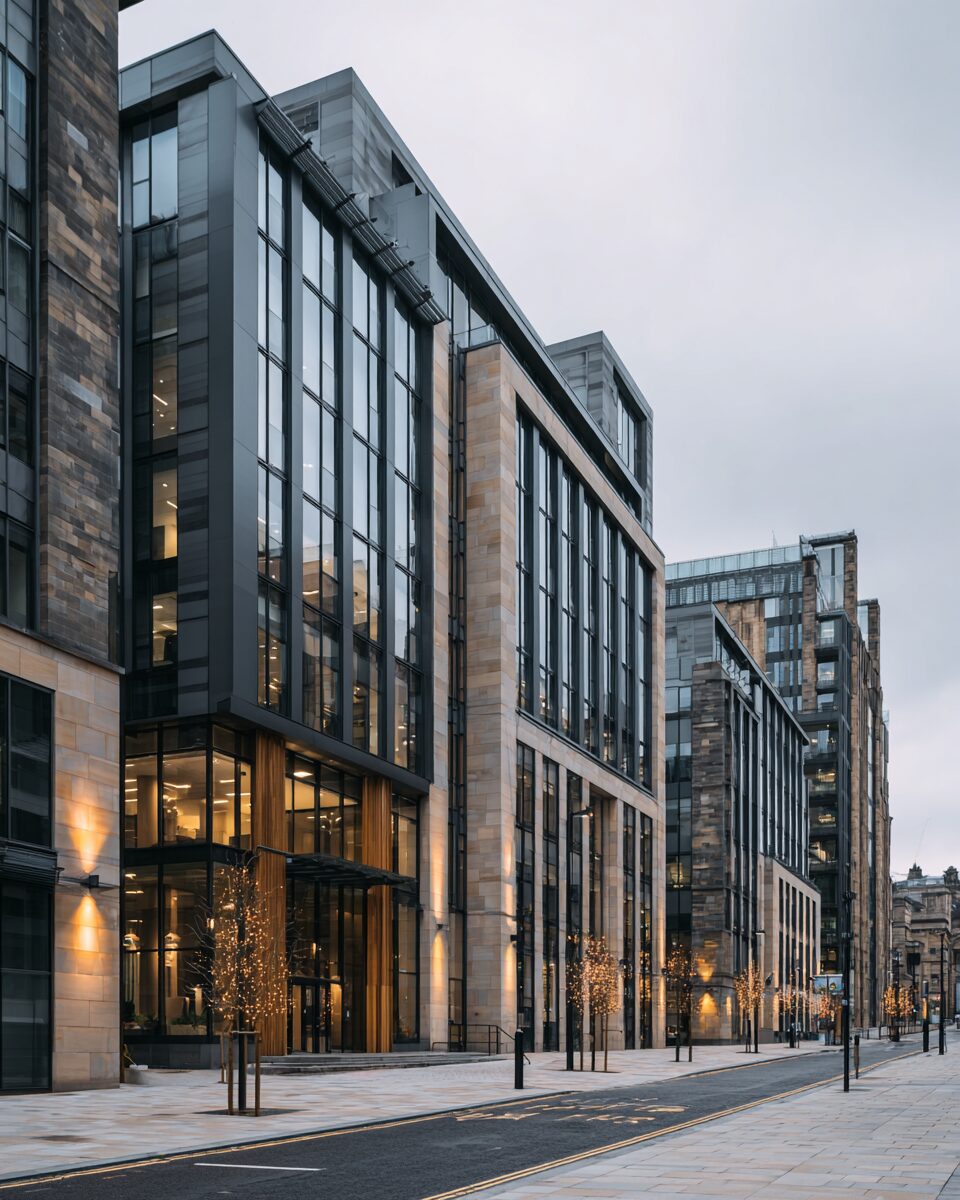
Glasgow's commercial market operates differently from England's major cities in one important respect: a significant proportion of its largest occupiers have cleaning contracts negotiated at a UK or group level, often from a London or Edinburgh procurement base, and applied to Glasgow without local calibration. This creates a structural mismatch between what the contract specifies and what the Glasgow market can deliver at the contracted rate. Our analysts see this pattern frequently in IFSD buildings, where a national framework contract is applied to a Glasgow campus with a different floor plate, different access regime, and different washroom-to-headcount ratio from the building the contract was originally scoped for.
Merchant City's mix of commercial offices, hospitality venues, and converted warehouse space creates cleaning contracts that frequently conflate use types. A ground-floor restaurant serving the same landlord as upper-floor offices should not be operating under a single specification, yet combined contracts are common and create accountability gaps. Pacific Quay, anchored by media and broadcast tenants, shares the access constraint issues familiar from MediaCityUK in Manchester. The Clyde Gateway regeneration corridor, spanning Bridgeton and Dalmarnock, brings newer commercial stock where contracts are often in their first generation and have not yet been tested against renewal.